
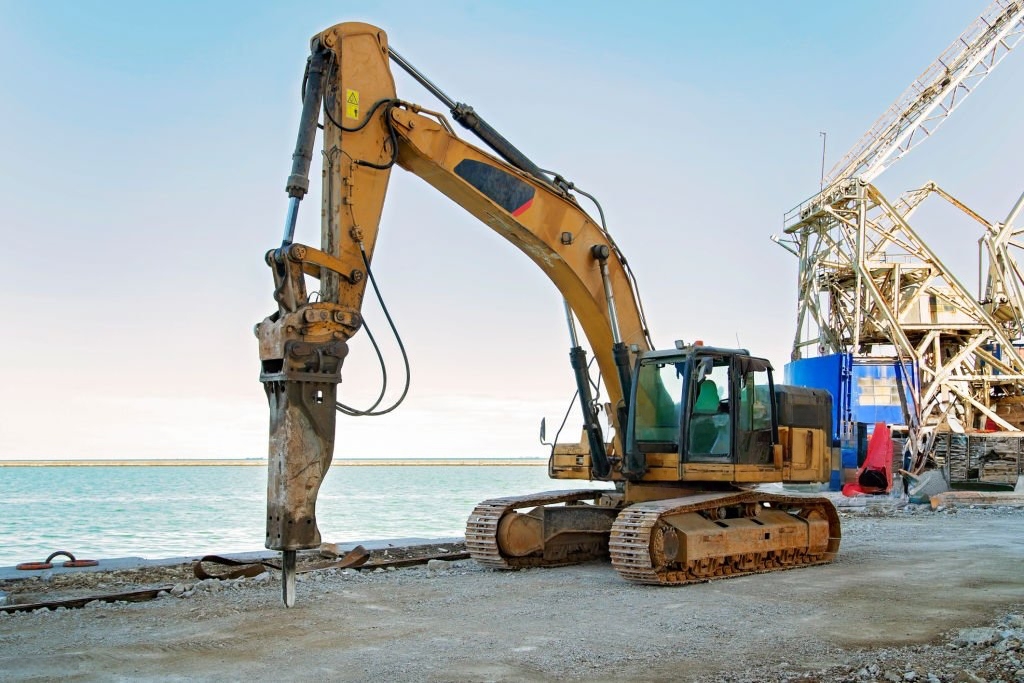
Most buyers start with one question: what size hydraulic breaker fits my excavator? Excavator tonnage is a useful first filter, but it is not enough to place a safe order. The carrier's auxiliary oil flow, operating pressure, mounting dimensions and the material on site all affect the final choice.
At Zbreaker, we normally ask for the excavator model, tonnage, hydraulic flow, operating pressure and working conditions before recommending a model. That takes a little longer than matching a breaker by name, but it avoids two common problems: a breaker that is too small to do productive work, or a breaker that overloads the carrier's hydraulic system.
Start with the Excavator, Not the Breaker
Before comparing hydraulic breaker models, write down these details from the excavator manual or ask your dealer for them:
- Excavator brand and exact model
- Operating weight and tonnage class
- Auxiliary hydraulic oil flow in L/min
- Auxiliary operating pressure
- Quick coupler or mounting bracket dimensions
- Pin diameter, pin centre distance and arm width
- Material to be broken and the expected working hours
The oil-flow and pressure values are especially important. A breaker may be listed for the correct excavator tonnage but still be a poor match if the carrier cannot supply the required hydraulic range. Do not use the excavator's main pump rating as a substitute for the auxiliary circuit specification.
Use Excavator Tonnage as a Range, Not a Final Answer
Manufacturers usually list a recommended excavator class for each breaker. Treat this as a working range rather than an automatic answer. A 20-ton excavator used for light concrete breaking may need a different setup from a 20-ton excavator working all day in hard rock.
The following Zbreaker models show how the specifications change inside similar tonnage classes. The figures are reference values from the product pages; housing selection can change the operating weight, and the final match should be confirmed against the actual excavator manual.
| Model | Excavator class | Operating weight | Tool diameter | Oil flow | Operating pressure |
|---|---|---|---|---|---|
| ZSB45 | 7–14 t | Approx. 559–733 kg | 85 mm | 60–100 L/min | 130–160 kg/cm² |
| ZSB81 | 18–26 t | Approx. 1,774–2,059 kg | 140 mm | 120–180 L/min | 160–180 kg/cm² |
| ZHB20G | 18–26 t | Approx. 1,698–1,800 kg | 135 mm | 145–180 L/min | 160–180 kg/cm² |
For the complete range, compare the specifications on the Zbreaker hydraulic breaker product page. If your excavator sits near the edge of a model's range, send us the exact carrier model instead of choosing only by tonnage.
Check Hydraulic Flow and Pressure Before Ordering
Hydraulic flow controls how much oil reaches the breaker. Operating pressure determines whether the breaker can develop its intended impact force. Both values must fall within the breaker's working range.
- Flow too low: the breaker may run slowly or deliver less productive output.
- Flow too high: the hydraulic oil can overheat and the breaker may suffer unnecessary wear.
- Pressure too low: impact energy may be lower than expected.
- Pressure too high: seals, valves and other components can be exposed to excessive load.
Flow and pressure should be measured or confirmed on the auxiliary circuit, not guessed from the excavator's advertised engine power. Hose diameter, quick coupler restrictions and the setting of the carrier's control valve can also affect the result. If you are unsure, ask for a hydraulic compatibility check before shipment.
Choose the Housing Type for the Job Site
Zbreaker offers Side, Top and Box housing options on applicable models. The internal breaker model and the housing are related, but they are not interchangeable labels for the same installation.
- Side Type: a practical option for general breaking work where side protection and a conventional mounting arrangement suit the carrier.
- Top Type: a common mounting arrangement for many excavators. Check the bracket dimensions and available clearance around the boom and arm.
- Box Type: an enclosed housing that can help reduce operating noise and protect the breaker body in sites where noise or surrounding conditions are important.
Housing type changes the operating weight and may change the mounting dimensions. For example, the ZSB45 product page lists different operating weights for Side, Top and Box versions. Confirm which housing is included in the quotation and which weight applies to that version.
Match the Breaker to the Material and Work Pattern
The same breaker can behave very differently in different materials. Describe the actual work instead of only saying “demolition.” Useful details include:
- Unreinforced concrete, reinforced concrete or asphalt;
- Soft rock, hard rock or oversized quarry stone;
- Secondary breaking after blasting;
- Trenching, foundation removal, road repair or building demolition;
- Occasional use or several hours of breaking every day.
For example, a contractor removing concrete in an urban area may value a manageable housing and smooth operation. A quarry operator breaking oversized rock may prioritise impact energy, wear-part availability and long working intervals. These are different selection priorities even when the carrier tonnage is similar.
Example: Selecting a Breaker for an 18–26 Ton Excavator
Suppose a contractor has an 18–26 ton excavator and needs to remove reinforced concrete. Two possible Zbreaker models in this class are the ZSB81 and ZHB20G.
The ZSB81 page lists a 140 mm tool, 350–500 bpm impact rate and 120–180 L/min oil flow. The ZHB20G page lists a 135 mm tool, 360–460 bpm impact rate and 145–180 L/min oil flow. Neither model should be selected from these numbers alone. The contractor still needs to compare the excavator's actual auxiliary circuit, the mounting bracket and the required breaking output.
This is why a useful quote request includes the excavator model, hydraulic flow and pressure, material, working hours and preferred housing. A technical recommendation should explain why the model was selected, not simply repeat the excavator tonnage.
Installation Checks Before the First Job
After receiving the breaker, check the installation before starting full production:
- Confirm that the mounting bracket and pins fit without forced alignment;
- Connect the hoses to the correct pressure and return lines;
- Check hose routing so it cannot rub against the boom or breaker body;
- Set the carrier's auxiliary flow and pressure within the breaker specification;
- Run the breaker briefly at low engine speed and check for leaks;
- Strike the material vertically and avoid using the breaker as a pry bar.
Always follow the manual supplied with the actual unit. The manual and the carrier manufacturer's instructions take priority over a general online guide.
What Information Should You Send for a Correct Recommendation?
For a fast and accurate recommendation, send:
- Excavator brand, model and operating weight;
- Auxiliary oil flow and operating pressure;
- Photos or dimensions of the existing bracket;
- Material and application;
- Expected daily working hours;
- Preferred housing type, if you already have one in mind.
You can compare the ZSB and ZHB product range, or contact Zbreaker with these details for a model recommendation. For a specific model, you can also review the ZSB151 and ZHB50G product pages.
Final Checklist
- Do I know the excavator's auxiliary flow and pressure?
- Does the breaker weight suit the carrier and bracket?
- Does the tool diameter match the material and workload?
- Have I chosen Side, Top or Box housing for the actual site?
- Are the hose, pin and mounting dimensions confirmed?
- Have I checked the manual and warranty terms before ordering?
A hydraulic breaker is a working tool, not only a catalogue number. Matching the carrier, hydraulic circuit, housing and application gives you a better chance of stable output and lower downtime. Send Zbreaker your excavator model and working conditions through the contact page for a compatibility check and quotation.